
TULUVA GUARDIAN ARCHIVE
DOCUMENTING THE ALUPA LEGACY
DOCUMENTING THE ALUPA LEGACY
PELATTUR: While modern political efforts focus on the future, the Pelattur inscription reminds us of a grounded, historical past. This stone record is proof of a sophisticated administrative system that functioned in our native script over 1,400 years ago.
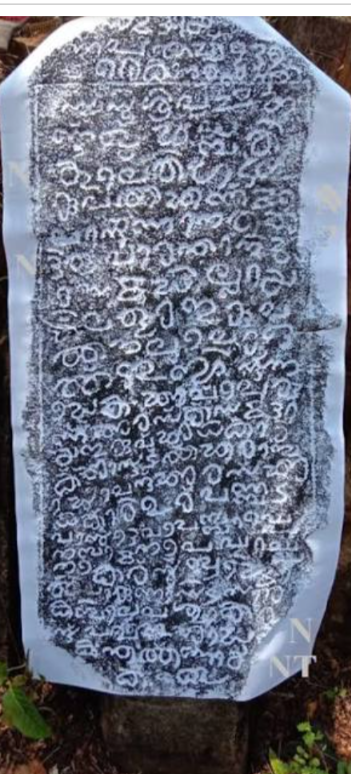
The 7th-century slab discovered at Pelattur.
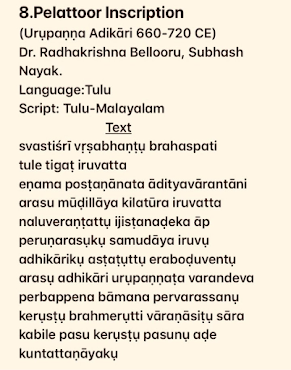
Standardized reading of the ancient phonetics.
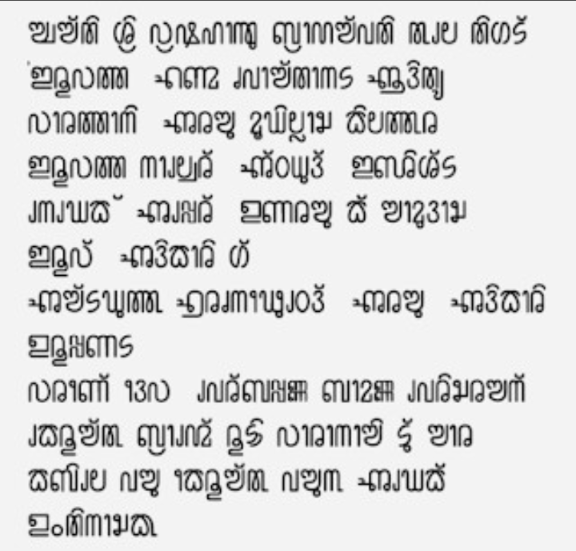
Reconstruction for Unicode 16.0 / Gboard integration.
The inscription records a high-stakes legal drama. A nobleman with the massive compound title Varandeva Perbappena Bamanna Pervarasa stood accused of a capital crime. To ensure justice, the officer Uruppana convened the Parliament of 24. The trial concluded with a guilty verdict, sentencing the official and invoking an eternal curse: anyone who interfered with this decree would bear the sin of slaying a thousand cows in Varanasi. This proves Tulu was the Language of Command.
The mention of the "Iruvatta Naluveren" (The Twenty-Four) is the most significant political revelation in the Pelattur archive. This was a Tuluva Parliament from the Kilattur block. In an era of absolute autocracy, the Alupa state practiced a decentralized model where a council represented local interests.
| Archaic Form (7th c.) | Modern Interpretation | Significance |
|---|---|---|
| Arasu | Arasu / Rajae | Standardized title for Sovereignty. |
| Adikari | Adhikari | Continuity of administrative roles. |
| Tatthu | Nēmakathi (ನೇಮಕಾತಿ) | The archaic root for selection has evolved into the modern term for recruitment, showing administrative continuity. |
Note: The evolution from Tatthu to the modern Nēmakathi shows the natural aging of a living language.
The names found here act as linguistic fossils of a culturally confident Tulu Nadu: