
For generations, mainstream historiography has painted the early Vijayanagara Empire with a uniform brush, characterizing its courtly life as exclusively Kannada- and Telugu-centric. The rich coastal strip of Tulu Nadu—comprising the administrative strongholds of Barkur and Mangaluru—was long relegated to a mere economic periphery, valued chiefly for its wealthy ports and maritime revenue.
However, a revolutionary convergence of epigraphical art, literary discoveries, and timeline cross-verification has shattered this minimalist narrative. The evidence reveals a staggering truth: during the high medieval period, the imperial court of Vijayanagara wasn't just governing Tulu Nadu—it was utterly mesmerized by it. At the center of this cultural renaissance stands the fascinating figure of Emperor Immadi Harihara (Harihara II, r. 1377–1404 CE) and his contemporary, the brilliant local poet Arunabja of Kodavoor.
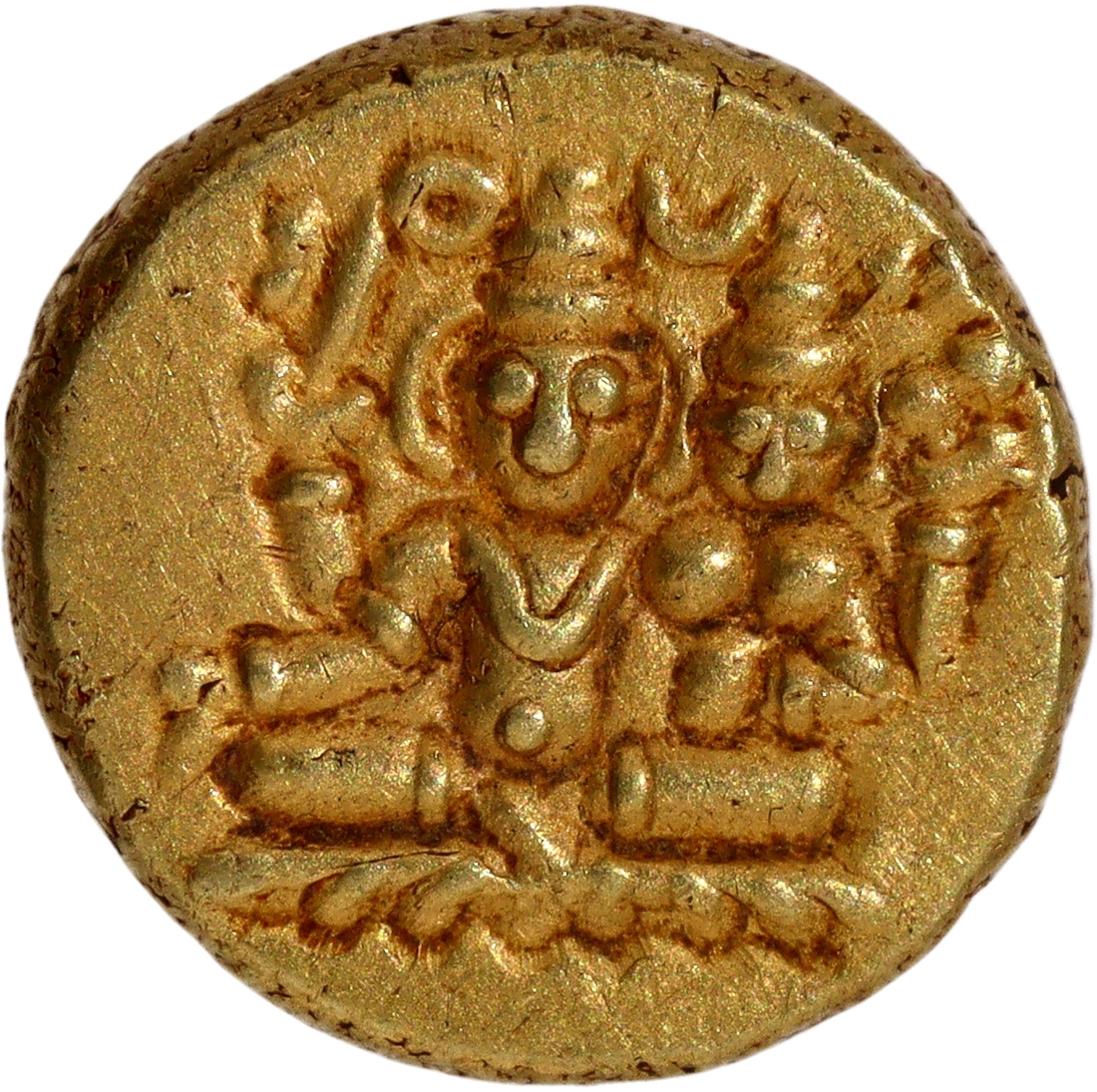
The Currency of Sovereignty: A Numismatic Manifesto
To understand the depth of this era, one must look directly at the imperial currency that circulated through the bustling western ports of Tulu Nadu. As seen in Figure 1, the gold Varaha coins issued under Immadi Harihara feature a highly distinct iconographic motif: Lord Shiva and Goddess Parvati seated in divine alignment. Shiva holds his sacred attributes, presenting a powerful statement of the Sangama dynasty's deep-rooted Shaivite devotion.
Yet, the political genius of this coin lies in its dual purpose. While the currency carried the physical stamp of the imperial state religion, the emperor himself was busy composing the Tulu Mahabharata—a monumental Vaishnava epic. By holding a staunch devotion to Shiva on state coinage while actively patronizing and scripting the glories of Vishnu's avatars in the regional languages of his territory, Immadi Harihara executed a masterstroke of cultural synthesis. This coin wasn't just money; it was a mobile political billboard that legitimized Vijayanagara rule across the diverse religious and linguistic landscape of the coastal belt.
The Deity and the King: A Visual Manifesto
To understand this era, one must look no further than the monumental stone stelas of Harihara commissioned during the high-point of Sangama governance. A classic example is the intricately carved stela splitting the divine form down the center—Shiva on the right (viewer's left), holding the Trishula with matted Jatamukuta hair, and Vishnu on the left (viewer's right), bearing the Sudarshana Chakra and wearing the regal Kiritamukuta.
Historically, the early Sangama rulers were fiercely devoted to Virupaksha (Shiva). Yet, as Immadi Harihara consolidated his grip over the expansive southern peninsula and the western coast, his reign initiated a massive state-level pivot toward religious and cultural synthesis. By placing highly stylized Harihara icons in regional temple niches (devakosthas) and at the crest of land-grant inscriptions (gadhegals), the emperor sent a clear political message. The icon was a visual coat-of-arms for a monarch who sought to blend the Shaivite roots of his dynasty with the rich Vaishnava heritage of the lands he governed.
The Imperial Composition: The Tulu Mahabharata
The grandest validation of Tulu’s courtly status came with the discovery of the classical Tulu Mahabharata (specifically the Karna Parva section), historically attributed to Immadi Harihara himself. Found on ancient palm-leaves written in the sacred Tulu-Tigalari script, this text upended centuries of linguistic assumptions.
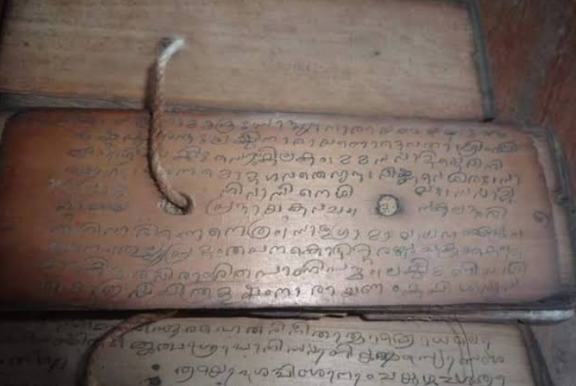
For an emperor to personally compose or heavily patronize a monumental epic in Tulu demonstrates that the language was never a mere localized spoken dialect. In the medieval world, rendering a Sanskrit epic into a vernacular tongue was the ultimate royal stamp of legitimacy. It signaled that Tulu possessed the vocabulary, metrical versatility, and philosophical depth to carry the weight of cosmic and divine discourse. Strategically, it was a masterstroke—bridging the gap between the Vijayanagara capital and the fierce, independent identity of the Tuluva people.
The Crucial Link: Arunabja of Kodavoor
If skeptics initially viewed a royal Tulu epic as an isolated anomaly, the timeline provides an airtight rebuttal through the genius of Arunabja. Living in Kodavoor, right in the heart of the Udupi coastal belt, Arunabja composed his own magnificent Tulu Mahabharato around 1383 CE. This date places him as an exact contemporary to the reign of Immadi Harihara.
"Teliwullakulu bhumi tulai Ramayana kavya tulu bhashe kavikulu vistaritereiyer..."
By explicitly honoring the Tulu poets and sprawling Tulu Ramayanas that came before him in his Purva Kavi Smarane, Arunabja proves that by the late 14th century, Tulu already boasted a mature, highly respected, and deeply rooted written poetic tradition.
The Imperial Court
Immadi Harihara: Authorship and high patronage of the Tulu Mahabharata (Karna Parva) to unify the empire's wealthy coastal strongholds.
The Coastal Belt
Arunabja of Kodavoor: Independent composition of the Tulu Mahabharato (1383 CE), validating a pre-existing classical poetic heritage.
A Legacy Preserved on Leaf and Stone
The concurrent work of an emperor in the capital and a local poet in Kodavoor proves that a coordinated cultural movement was underway. The Udupi-Vijayanagara nexus was alive with intellectual fervor. As the empire established its administrative apparatus and issued stone grants across the coastal ports, it actively adopted the linguistic identity of the region.
When we look at the intricate lines of a medieval Harihara sculpture today, we are looking at the visual embodiment of that golden era. It is a monument to a time when the boundaries between the warrior, the scholar, and the deity dissolved—a time when the court of Vijayanagara looked out at the Tuluva landscape and was genuinely, undeniably captivated.