By the mid-14th century, a dark shadow had fallen over the Indian subcontinent. The Tughlaq Dynasty of Delhi had unleashed a relentless military machine across the Deccan plateau. Massive regional superpowers—the Seunas of Devagiri, the Kakatiyas of Warangal, and the Hoysalas of Halebidu—collapsed under the weight of the Sultanate’s cavalry.
Yet, as the map of India turned the color of the Delhi Sultanate, one coastal paradise stood entirely unbroken, sovereign, and defiant: Tulunadu.
The mastermind behind this legendary resistance was none other than the Alupa Emperor, King Basava Shankara Soyideva Alupendra (1315–1335). This is the untold story of how a Taulava king achieved what the largest empires of the era could not: a total strategic victory over Tughlaq expansion.
The Western Ghats: Soyideva’s Wall of Fire
The Tughlaq military machine relied on massive, sweeping cavalry charges designed for flat, open plains. King Soyideva understood this perfectly. Instead of marching his forces onto the Deccan plateau for an open-field battle, he executed a flawless strategy of territorial deterrence.
Soyideva rallied the fierce local Tuluva military elite—the legendary Bunt chieftains, Nadavas, and Jaina traditional warriors. Together, they turned the steep, dense jungles of the Western Ghats into an impenetrable fortress.
Every mountain pass (Ghat) leading down to the wealthy coastal trading ports of Barkur and Mangalore was locked down. Whenever Tughlaq scout detachments attempted to push westward, they were met with brutal guerrilla ambushes. Cut off from supply lines and unable to deploy their cavalry in the treacherous terrain, the Sultanate forces realized that invading Tulunadu meant certain annihilation. Soyideva broke the enemy’s momentum and forced the most powerful empire in India to completely abandon its plans for the coast.
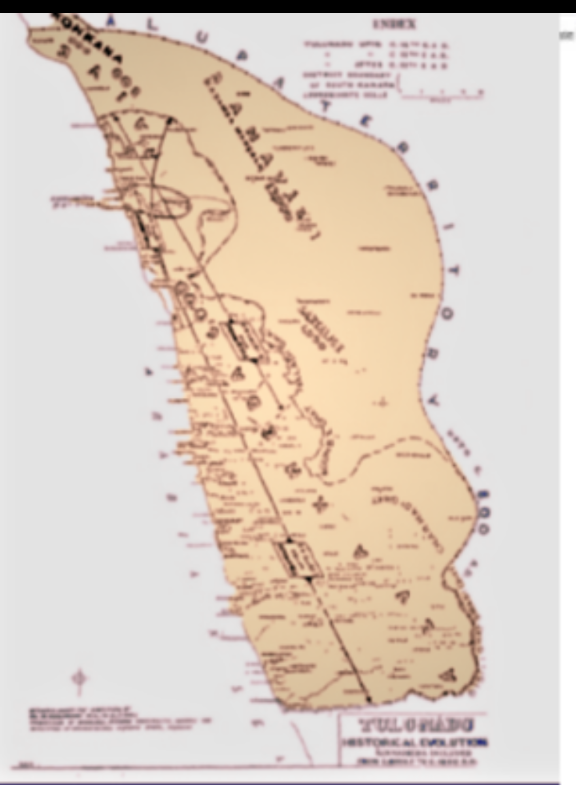 Archival Map (Digitally Enhanced): The historical evolution and territorial boundaries of the Alupa Kingdom (Alvakheda).
Carved in Stone: The Evidence at Barkur
Mainstream history textbooks written from a Delhi-centric perspective often overlook regional triumphs, but history cannot erase what is carved in stone. In the ancient Alupa capital of Barkur, 14th-century stone inscriptions at the Somanathesvara temple reveal the true extent of Soyideva’s triumph. In these edicts, he is decorated with grand, sovereign titles: Srimantapandya Chakravarthi and Ariraya Basavashankara.
.jpg)
"In the 1320s and 1330s, there was only one existential Ari (enemy) threatening the survival of southern kingdoms: the Tughlaq Dynasty. By adopting this title, Soyideva made a permanent declaration to the medieval world that Tulunadu had broken the power of the foreign invaders and maintained absolute independence."
— Ariraya Basavashankara: "The Destroyer of Foe Kings"
Sovereignty in Speech: The Tulu Inscriptions
A true emperor does not just defend his borders with iron; he protects his people’s identity. While foreign invaders sought to impose standard imperial administrative systems across the subcontinent, King Soyideva Alupendra maintained Tulu as a proud administrative language of his court.
Following the rich tradition of Alupa royal patronage, administrative decrees, temple grants, and state edicts were recorded locally, directly preserving the regional cultural fabric from being overwritten by outside languages. This official use of Tuluva epigraphy stood as a bold, written declaration of absolute cultural and political independence from the Delhi Sultanate.
The Phonetic Soul: Reclaiming the Name 'Soyideva'
In modern history textbooks, regional rulers are frequently stripped of their native linguistic identity, their names heavily Sanskritized for external courtly records. But the name Soyideva is a pure, uncompromised piece of indigenous Tuluva heritage. To understand the king, one must understand the language he fought to protect.
In the authentic Tulu vocabulary, the root Soyi (or Soya) carries a beautiful dual essence—it signifies "light, beauty, and sweetness," while traditionally translating to a "highly welcomed guest or presence." Combined with Deva (Lord or King), his name literally translates to "The Beloved King" or "The Lord of Light." It perfectly encapsulates a ruler who was a warm, cherished guardian to his people, but absolute iron against foreign invaders.
"For centuries, our icons have been filtered through outside lenses. Today, modern Tuluvas are reclaiming Soyideva not just as a figure in a book, but as a living symbol of digital and cultural resistance. Carrying his name and sharing his heroic image across our profiles, display pictures (DPs), and status updates isn't just an act of remembrance—it is a bold statement of linguistic pride and unyielding regional identity."
— The Tuluva Guardian: A Call to the Youth
The Lasting Legacy of a Free Tulunadu
A military victory is measured by whether an enemy achieves their objective. The Tughlaqs wanted to conquer, plunder, and tax the coastal ports. They failed completely.
Because Taulava Soyideva successfully held the line at the Ghats, Tulunadu never fell to the Delhi Sultanate. This crucial defensive victory bought enough time for the Tughlaq empire to collapse into internal rebellions by 1336, paving the way for the Alupas to form a peaceful, sovereign alliance with the newly rising Vijayanagara Empire.
It is because of King Soyideva's brilliant defense that the unique Tuluva culture, language, rituals, and sacred traditions survived completely untainted by outside administrative rule. Today, as we look back at the glorious history of coastal Karnataka, King Basava Shankara Soyideva Alupendra stands tall—not just as a ruler, but as the eternal guardian who kept the flame of Tulunadu burning bright against the greatest empire of his time.