Tuluva Guardian
Exclusive Special Report
The Sidelined Language and the Choked Leader:
Why National Parties Fail Tulunadu
The structural decay of a region rarely happens overnight; it is meticulously engineered through administrative silence and political subjugation. Today, Tulunadu stands as a textbook example of a coastal engine running on high-octane grassroots energy, only to be systematically choked by the rigid, top-down machinery of national political parties.
From the deliberate burial of linguistic identity to the sidelining of mass leaders who dare to look the high command "eye to eye," the message from Bengaluru and New Delhi is deafeningly clear: Your resources are ours, but your voice belongs in a locked archive.
The Paper Trail of Linguistic Betrayal
Nowhere is this calculated suppression more evident than in the absolute bureaucratic sabotage of the Gayathri Report—the definitive administrative blueprint meant to grant Tulu its constitutional right as an official language.
Exactly 90 days ago, this report was officially submitted to the state. Since then? A total, institutional blackout. The Department of Kannada & Culture assumed the file would gather dust in a dark corner, forgotten by a passive populace. They underestimated independent journalism.
The Tuluva Guardian Bureau refused to let our heritage be quietly erased by red tape. Our team launched a strategic Right to Information (RTI) offensive, demanding the immediate release of the Action Taken Report (ATR) and internal file notings.
The response was telling: complete silence. By blowing past the mandatory 30-day statutory window, the government committed a flagrant, illegal "Deemed Refusal" under registration number SECKC/R/2026/000032. This is a blatant constitutional violation. When a governance system routinely violates its own transparency laws to suppress a regional language, it fractures the very contract between the state and the people.
In response, our bureau has escalated this conflict into an absolute legal showdown, officially registering a formal First Appeal under registration number SECKC/A/2026/00004. We have officially ended the era of passive waiting.
The Choked Leader: The Blueprint of High Command Sabotage
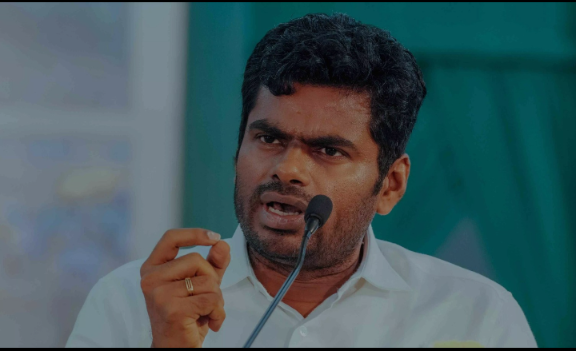
The administrative choking of the Tulu language perfectly mirrors the political choking of leaders who build genuine, grassroots power. The recent, explosive exit of K. Annamalai from the national political structure is not an isolated incident—it is the inevitable flashpoint of a system designed to destroy regional autonomy.
Annamalai—a fierce former IPS officer whose uncompromising style was forged right here in the coastal belt as the SP of Udupi—built an aggressive, grassroots counter-offensive that completely reshaped the southern political grammar. He didn't rely on backroom coalition deals; he relied on the people.
But national parties do not tolerate independent power centers. The moment regional leaders stand tall enough to challenge top-down dictates, the high command machinery moves to compromise them through shifting alliance formulas and mathematical seat-sharing equations. Annamalai’s resignation from primary membership—formally accepted by national president Nitin Nabin—was a direct rebellion against this exact subjugation. By walking away to launch an independent, principles-driven political movement inspired by Dr. A.P.J. Abdul Kalam, he proved that the era of swallowing high command mandates is officially over.
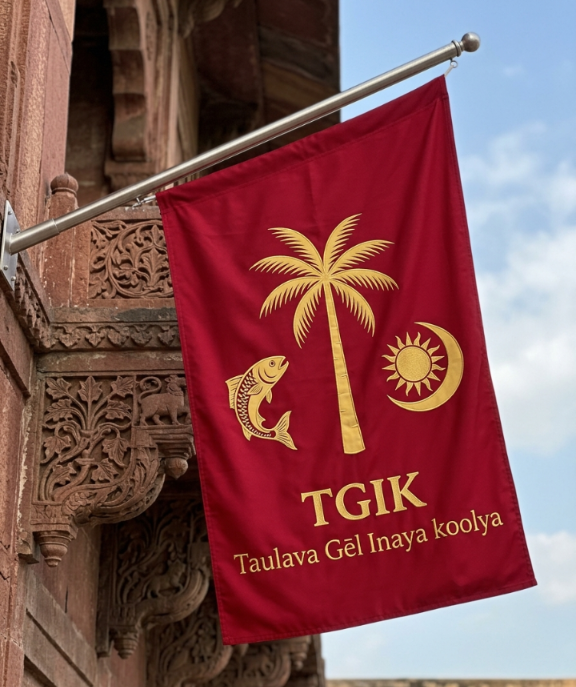
The Awakened Front: Taulava Gēl Inayo Koolya (TGIK)
The parallel between the hidden Gayathri Report and the sidelined leader reveals a harsh reality: national party structures require submissive regional actors, not dynamic, self-reliant movements. They want Tulunadu to remain divided, passive, and dependent.
But the era of waiting for handouts is officially over. This structural vacuum is exactly why an independent regional consciousness is awakening.
Platforms like Taulava Gēl Inayo Koolya (TGIK) are stepping directly into the breach. Driven by the exact clean, uncompromising common-man motive needed to shatter old-guard monopolies, TGIK is establishing itself as the strategic and ideological hub for an assertive Tulunadu. We aren't just documenting the system's decay; TGIK is weaponizing the law, tracing the paper trails, and actively building the framework for total regional accountability.
Why National Parties Will Always Fail Tulunadu
The ongoing political and bureaucratic landscape reveals the fundamental flaw of national party politics: They cannot govern a diverse regional landscape without attempting to homogenize it.
- Identity as a Threat: To a central high command, a distinct regional language like Tulu—with its ancient history, independent scripts, and deep coastal roots—is viewed not as wealth, but as a threat to centralized control. That is why reports are buried, and why statutory deadlines are shamelessly violated.
- The Cult over the Common Man: National structures thrive on predictable, top-down cult politics. They require submissive regional actors who execute orders, not dynamic leaders who build independent platforms aimed squarely at transforming governance for the common man.
- Resource Extraction, Cultural Erasure: Coastal Karnataka fuels the economy, hosts critical maritime trade corridors, and preserves a rich linguistic legacy. Yet, when it comes to official recognition, our files are locked away. We are expected to provide the revenue while remaining invisible and voiceless.
Cracking the Bureaucratic and Political Maze
The Tuluva Guardian Bureau was founded on a singular premise: we don't just report on the system; we expose its structural decay.
The era of trusting centralized promises is dead. Whether it is a state department hiding an Action Taken Report or a national party suffocating a regional movement, the strategy remains the same—keep the people divided, passive, and waiting.
The clock is ticking. If the Appellate Authority does not break its silence on the Gayathri Report immediately, our next stop is dragging this constitutional violation straight to the Information Commission in Bengaluru. And as the political deck completely re-shuffles across the South, our team alongside TGIK will be right here, tracing the deeper grassroots realignments.
The paper trail always tells the truth, and the truth is simple: Tulunadu's future will never be secured by looking toward Bengaluru or New Delhi. It will be secured when we crack the maze ourselves.